
Everyone at the Table: Making Family Gatherings Accessible
November 6, 2026
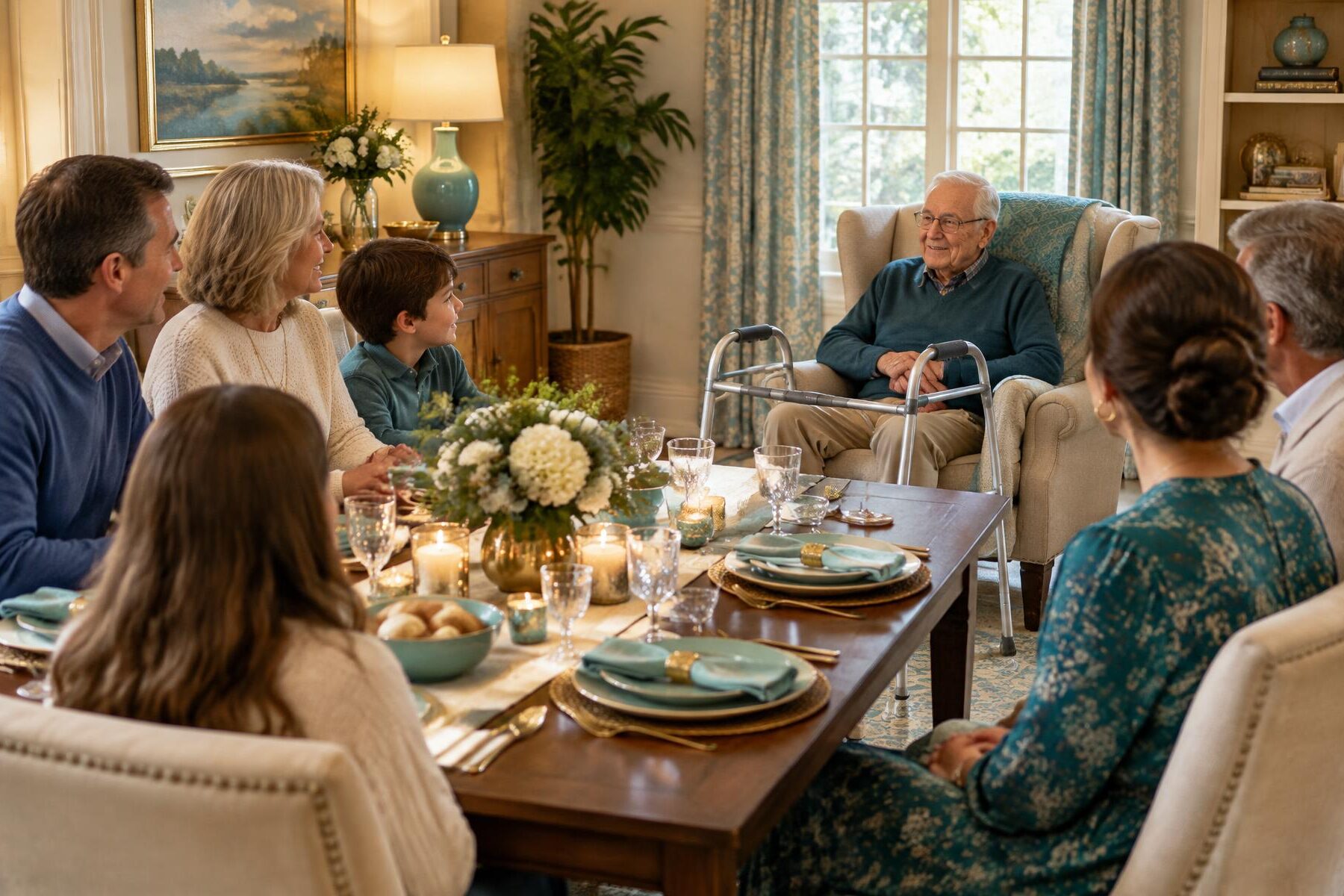
Family gatherings can bring joy and connection. For an older relative with hearing loss, mobility challenges, or sensitivity to noise and light, they can also be tiring or isolating. They may sit at the edge of the room, unable to follow conversations or move around easily.
A few thoughtful changes can help older relatives take part more fully. The best approach starts with asking them what would help.
Ask what would help
Before the gathering, ask your relative about their preferences. What makes gatherings hard? What would make them easier? Some people will tell you exactly what they need. Others may need gentle prompting.
- Is it hard to hear when many people are talking?
- Would you like a particular chair?
- Is there a time of day you feel best?
- Would a quiet room to rest in help?
Support hearing
Hearing changes are common with age. The National Institute on Aging offers tips for communicating with people who have hearing loss, such as facing the person when speaking and reducing background noise.
- Turn down or turn off background music during meals
- Seat your relative where they can see faces clearly
- Encourage family members to speak one at a time
- Choose a spot away from noisy kitchens or doorways
Plan for mobility
Look at the space from the perspective of someone who uses a cane, walker, or wheelchair, or who moves more slowly.
- Clear walkways of rugs, cords, and clutter
- Provide a sturdy chair with arms at a comfortable height
- Seat your relative close to the bathroom if helpful
- Make sure entryways and paths are well lit
Our article on making an aging parent's home safer has more ideas for reducing fall risks.
Consider sensory preferences
Bright lights, strong smells, and crowded rooms can be overwhelming for some people. Soft, even lighting tends to be easier on the eyes than glare. Offer a quieter space nearby where your relative can take a break without leaving the gathering entirely.
Pace the event
Long events can be tiring. Plan the most important parts, like a meal or a shared tradition, during your relative's best hours. Let them leave early or rest without explanation. Our article on planning a holiday visit around a parent's energy offers more ideas for pacing.
Include them meaningfully
Accessibility is about participation, not just comfort. Ask your relative to share a story, lead a tradition, or teach a recipe. Make sure they are part of conversations rather than talked about. Small invitations help people feel valued.
A sample gathering checklist
Here is an example to adapt before your next family event.
- Ask first: Talk with your relative about what would help.
- Seating: Sturdy chair with arms, good view of faces, near a quiet area
- Sound: Background music off during the meal. One conversation at a time.
- Lighting: Bright enough to see faces, without glare
- Paths: Clear walkways. Bathroom easy to reach.
- Pacing: Main events during their best hours. Rest break available.
- Participation: One meaningful role, if they want it
Share the planning
Hosting an accessible gathering takes some planning. Ask relatives to take specific tasks, like setting up seating or helping your relative arrive and leave comfortably.
Plan arrivals and departures
Getting in and out of a gathering can be the hardest part. Ask someone to meet your relative at the car, offer an arm on stairs if wanted, and save a parking spot close to the door. Agree in advance on a simple signal your relative can use when they are ready to leave, so they do not feel they must wait for the whole group. A calm exit helps them remember the gathering fondly.
If your relative uses a mobility aid, make sure there is a safe place to keep it within reach during the meal.
Your next step
Before your next gathering, ask your older relative one question: "What would make it easier for you to enjoy being there?" Plan around the answer.